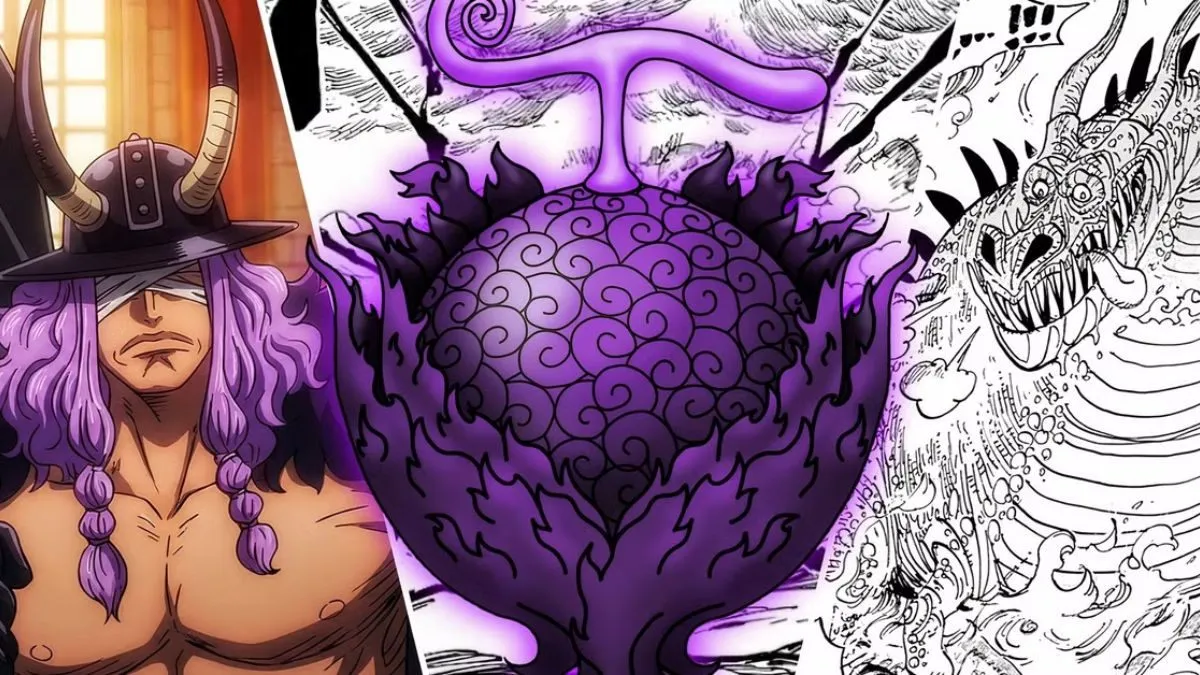

Loki’s Devil Fruit has quickly become one of the biggest talking points in the One Piece Elbaph Arc. For years, fans knew Loki as the mysterious “Accursed Prince” of Elbaph, but his true power makes him far more dangerous than a normal giant prince.
So, what is Loki’s Devil Fruit in One Piece?
Loki ate the Ryu Ryu no Mi, Model: Nidhöggr, also known as the Dragon-Dragon Fruit, Model: Nidhogg. It is a Mythical Zoan-type Devil Fruit that allows him to transform into a massive legendary dragon connected to Elbaph’s royal history and Norse-inspired mythology.
Spoiler warning: This article discusses manga details from the Elbaph Arc and Loki’s Devil Fruit reveal.
Quick Answer: What Is Loki’s Devil Fruit?
Loki’s Devil Fruit is the Ryu Ryu no Mi, Model: Nidhöggr.
It is a Mythical Zoan Devil Fruit that gives Loki the power to transform into a gigantic western-style dragon based on Nidhogg, a dragon from Norse mythology. In One Piece, this fruit is treated as an extremely important legendary fruit tied to Elbaph.
Because Loki is already a giant with Ancient Giant blood, his dragon transformation becomes unbelievably huge, making him one of the most physically terrifying characters introduced in the Final Saga.
Is Loki’s Devil Fruit Officially Confirmed?
Yes, Loki’s Devil Fruit is listed as the Ryu Ryu no Mi, Model: Nidhöggr, a Mythical Zoan-type Devil Fruit.
Before the reveal, many fans believed Loki might have a god-based, giant-based, or illusion-based power because of his name and his connection to Elbaph. However, the actual fruit connects him more directly to the dragon imagery of Norse mythology.
Manga Chapters Connected to Loki’s Fruit
Loki’s mystery builds across the Elbaph Arc through his introduction, imprisonment, royal-family backstory, and later Devil Fruit details.
Important story points include:
- Loki’s status as the prince of Elbaph
- His huge bounty and dangerous reputation
- His imprisonment with seastone chains
- The connection between Loki, King Harald, and Elbaph’s royal conflict
- The reveal of his legendary dragon-type Devil Fruit
- His massive dragon transformation and lightning-based attacks
The official manga can be read through:
Confirmed Facts vs Fan Theories
| Topic | Confirmed / Likely | Notes |
|---|---|---|
| Loki’s Devil Fruit name | Ryu Ryu no Mi, Model: Nidhöggr | Also called Dragon-Dragon Fruit, Model: Nidhogg |
| Fruit type | Mythical Zoan | A legendary dragon transformation fruit |
| Dragon form | Confirmed | Loki can transform into a massive dragon |
| Lightning attacks | Confirmed in current references | His dragon form uses destructive lightning-based power |
| Elbaph royal connection | Confirmed / strongly tied to story | The fruit has importance in Elbaph’s royal history |
| Stronger than Kaido? | Not confirmed | Loki is extremely dangerous, but a direct comparison is not settled |
| Final villain role | Theory | Loki may be important, but his exact Final Saga role is still developing |
What Is the Ryu Ryu no Mi, Model: Nidhöggr?
The Ryu Ryu no Mi, Model: Nidhöggr is a Mythical Zoan Devil Fruit that lets the user transform into Nidhöggr, a legendary dragon.
In Japanese, “Ryu” means dragon, which is why the English name is commonly understood as the Dragon-Dragon Fruit, Model: Nidhogg.
This fruit is not a normal Zoan. It belongs to the rare Mythical Zoan class, the same special category as some of the most powerful Devil Fruits in One Piece.
Why It Is a Mythical Zoan
Zoan fruits allow users to transform into animals. Ancient Zoans allow users to transform into extinct creatures. Mythical Zoans go even further by giving users the power of legendary creatures, gods, or mythical beings.
Loki’s fruit is special because Nidhogg is not just a normal dragon. It comes from mythology, which gives the fruit a legendary status.
That makes Loki’s Devil Fruit more comparable to powerful Mythical Zoans like:
- Luffy’s Hito Hito no Mi, Model: Nika
- Marco’s phoenix fruit
- Kaido’s dragon fruit
- Yamato’s Okuchi no Makami fruit
Loki’s fruit stands out because of its scale. A human user would already become massive, but Loki’s giant body makes the Nidhogg transformation even more extreme.
Why “Nidhogg” Matters
Nidhogg, or Nidhöggr, is a dragon from Norse mythology. It is often connected to the world tree imagery, which fits perfectly with Elbaph’s Norse-inspired culture.
This matters because Elbaph is deeply tied to:
- Giant warriors
- Norse mythology references
- Royal bloodlines
- Ancient legends
- The Treasure Tree Adam
- The Sun God and Nika themes
By giving Loki a Nidhogg-based Devil Fruit, Eiichiro Oda connects Loki’s power to Elbaph’s mythological foundation. He is not just another strong fighter. His fruit makes him part of Elbaph’s deeper legend.
What Powers Does Loki’s Devil Fruit Give Him?
Loki’s Devil Fruit gives him the ability to transform into a huge dragon with terrifying destructive power.
His known abilities include:
- Massive dragon transformation
- Extreme physical strength
- Powerful claws
- Huge body size
- Flight or wing-based movement
- Lightning-based attacks
- Supreme King Haki-enhanced destruction
- Enormous durability
Because Loki is already one of the largest giants alive, his full beast form becomes almost impossible to ignore in battle.
Colossal Dragon Transformation
The biggest power of Loki’s Devil Fruit is his transformation into Nidhogg.
In this form, Loki becomes a massive four-legged dragon. Unlike Kaido’s eastern dragon form, Loki’s Nidhogg form looks closer to a western-style dragon with a huge body, claws, and wings.
His size is one of the scariest parts of the fruit. Since the transformation scales with the user’s natural body, Loki’s giant heritage allows him to draw out much more of the fruit’s potential than an ordinary human could.
This means Loki’s dragon form is not just large. It is gigantic even by Elbaph standards.
Claws, Strength, and Durability
Loki’s Devil Fruit greatly boosts his physical power.
In dragon form, he can use his claws, jaws, body weight, and raw strength to crush or tear through enemies. Since Loki already has the natural strength of a giant, the Mythical Zoan power makes him even more dangerous.
His durability is also important. Loki has survived extreme punishment, imprisonment, and seastone restraint. Even weakened, his body and willpower remain frightening.
That is why Elbaph treated him as a threat that needed to be chained.
Wings and Flight
Loki’s Nidhogg transformation includes wings, giving him aerial mobility.
This makes him far more dangerous than a ground-based giant. A giant warrior is already difficult to defeat, but a giant dragon that can move through the air creates a completely different level of threat.
Flight also allows Loki to attack from above, cover huge distances, and turn Elbaph’s massive landscape into a battlefield.
Lightning-Based Attacks
One of Loki’s most dangerous abilities is his lightning-based attack power.
In dragon form, Loki can release powerful lightning blasts from his mouth. These attacks are not small electric shocks. They are destructive enough to cause massive explosions and widespread damage.
His known lightning technique includes Thorheim, a thunder-themed attack that fits Elbaph’s Norse inspiration. The name connects to Thor, the Norse god of thunder, which makes the ability feel perfectly matched to Loki’s mythology-based power.
Even more dangerous, Loki can enhance his attacks with Supreme King Haki, making his lightning attacks much deadlier.
How Is Loki’s Dragon Fruit Different From Kaido’s Fruit?
Loki’s Devil Fruit is naturally compared to Kaido’s because both characters have dragon powers.
Kaido ate the Uo Uo no Mi, Model: Seiryu, which lets him transform into an eastern-style Azure Dragon. Loki’s fruit, however, is the Ryu Ryu no Mi, Model: Nidhöggr, based on a western-style mythological dragon.
| Character | Devil Fruit | Dragon Type | Main Theme |
|---|---|---|---|
| Kaido | Uo Uo no Mi, Model: Seiryu | Eastern dragon | Azure dragon, clouds, elemental destruction |
| Momonosuke | Artificial version of Kaido’s fruit | Eastern dragon | Copy of Kaido’s power |
| Loki | Ryu Ryu no Mi, Model: Nidhöggr | Western/Norse dragon | Giant-scale dragon, lightning, Elbaph mythology |
Western Dragon vs Eastern Dragon Design
Kaido’s dragon form is long, serpentine, and based on eastern dragon mythology. He flies using flame clouds and has a majestic, godlike dragon design.
Loki’s Nidhogg form is different. It is closer to a western dragon with a larger body, legs, claws, and wings.
This difference matters because Oda often uses Devil Fruit designs to reflect cultural themes. Kaido’s fruit fits Wano and eastern dragon legends, while Loki’s fruit fits Elbaph and Norse mythology.
Lightning Theme vs Kaido’s Broader Elemental Powers
Kaido’s dragon form uses several types of elemental attacks, including fire, wind, and lightning-like destruction.
Loki’s fruit appears more focused on thunder and lightning-based devastation. His abilities feel heavily tied to Elbaph’s Norse inspiration, especially through thunder-themed attacks like Thorheim.
However, it is too early to say that Loki’s fruit is stronger than Kaido’s.
Kaido was one of the Four Emperors and had decades of battle experience, monstrous Haki, and one of the most durable bodies in the series. Loki’s fruit may have greater mythological scale, but direct superiority has not been fully proven.
Why Was Loki Chained If He Had This Devil Fruit?
Loki was chained because his power, reputation, and history made him too dangerous to leave free.
A normal giant is already powerful. A giant prince with a legendary Mythical Zoan dragon fruit is a national-level threat. Add Loki’s personality, royal conflict, and connection to Elbaph’s internal tragedy, and it becomes clear why he was imprisoned.
Seastone chains were necessary because seastone weakens Devil Fruit users. Without that restraint, containing Loki would be nearly impossible.
Elbaph’s Royal Bloodline and the Legendary Fruit
Loki’s Devil Fruit is not just a random power he found. It is tied to Elbaph’s royal history and legendary status.
That makes the fruit politically important as well as physically powerful. Whoever controls the fruit controls a major piece of Elbaph’s ancient power.
This also explains why so many powerful figures would care about Loki and his ability.
Loki, Harald, Shanks, and Gaban
Loki’s story is connected to several important names, including King Harald, Shanks, and Scopper Gaban.
King Harald’s role is especially important because Loki’s past is tied to Elbaph’s royal conflict and the truth behind his reputation. Loki is not simply a villainous prince who caused chaos for no reason. His backstory is more complicated.
This makes his Devil Fruit reveal more interesting. The fruit is not only a power-up. It is connected to the tragedy and politics of Elbaph itself.
For more background, read AnimeCrisp’s related article:
Loki’s Haki Makes His Devil Fruit Even More Dangerous
Loki’s Devil Fruit is terrifying on its own, but it becomes much more dangerous when combined with Haki.
In One Piece, Devil Fruit power alone is not enough at the highest level. The strongest characters usually combine their abilities with advanced Haki. Loki appears to follow that same pattern.
Supreme King Haki Connection
Loki’s lightning attacks can be enhanced with Supreme King Haki, also known as Conqueror’s Haki.
This is a huge deal because Supreme King Haki is one of the clearest signs that a character belongs among the elite fighters of the world.
A giant dragon using lightning attacks is already destructive. A giant dragon coating or enhancing that destruction with Supreme King Haki is far worse.
That is why Loki has the potential to become one of the most dangerous fighters in the Final Saga.
Why the Fruit + Haki Combo Matters in the Final Saga
The Final Saga is filled with characters who have world-changing power:
- Luffy
- Shanks
- Blackbeard
- Imu
- The Five Elders
- The Holy Knights
- The Revolutionary Army
- Elbaph’s strongest warriors
For Loki to matter in this stage of the story, he needs more than a strong body. His Mythical Zoan fruit and Haki make him relevant in a world where only the strongest can influence the final battle.
Loki’s power could affect Elbaph’s future, the World Government conflict, and the larger battle surrounding the Sun God Nika legend.
Why Loki’s Devil Fruit Matters for Elbaph and the Final Saga
Loki’s Devil Fruit matters because it connects several major themes at once:
- Elbaph’s royal family
- Norse mythology
- Ancient giant blood
- Legendary Devil Fruits
- The Sun God theme
- The World Government’s interest in powerful weapons
- The Final Saga’s power balance
Loki is not just strong. He represents Elbaph’s hidden danger.
Connection to Elbaph’s Myths
Elbaph has always been one of the most mythic locations in One Piece. It is the land of giants, warriors, legends, and old beliefs.
A Nidhogg-based Devil Fruit fits that setting perfectly.
Nidhogg’s connection to world tree mythology also pairs well with Elbaph’s massive tree imagery and the Treasure Tree Adam. This gives Loki’s power a deeper symbolic role.
He is not just a dragon. He is Elbaph’s dragon.
Connection to the World Government Conflict
A giant prince with a Mythical Zoan dragon fruit is exactly the kind of figure the World Government would fear or want to control.
Elbaph is already one of the most powerful nations in the world because of its giant warriors. If Loki’s Devil Fruit can unlock even greater destructive force, then Elbaph becomes even more important in the Final Saga.
This could explain why Loki’s existence matters beyond Elbaph itself.
Confirmed Facts About Loki’s Devil Fruit
Here are the main confirmed or strongly established points about Loki’s Devil Fruit:
- Loki’s Devil Fruit is the Ryu Ryu no Mi, Model: Nidhöggr
- Its English name is Dragon-Dragon Fruit, Model: Nidhogg
- It is a Mythical Zoan-type Devil Fruit
- Loki can transform into a massive dragon
- His dragon form is western/Norse-inspired
- The fruit is tied to Elbaph’s legendary history
- Loki’s giant body makes the transformation even larger
- He can use destructive lightning-based attacks
- His lightning attacks can be enhanced with Supreme King Haki
- Seastone chains were used to restrain him because he is a Devil Fruit user
Common Theories About Loki’s Devil Fruit
Before Loki’s Devil Fruit was revealed, fans had several theories.
Some believed he might have:
- A god-based Devil Fruit
- A trickster or illusion fruit
- A giant-related fruit
- A Fenrir wolf fruit
- A mythical Norse god fruit
- A Sun God-related power
These theories made sense because Loki’s name comes from Norse mythology, and Elbaph is heavily inspired by Norse culture. However, the Nidhogg reveal shows that Oda chose a dragon route instead of making Loki a direct trickster-god figure.
That choice works well because Nidhogg is still deeply connected to Norse mythology while giving Loki a visually powerful Final Saga transformation.
FAQs About Loki’s Devil Fruit
What is Loki’s Devil Fruit called in One Piece?
Loki’s Devil Fruit is called the Ryu Ryu no Mi, Model: Nidhöggr, also known as the Dragon-Dragon Fruit, Model: Nidhogg.
Is Loki’s Devil Fruit a Mythical Zoan?
Yes. Loki’s Devil Fruit is a Mythical Zoan-type Devil Fruit based on Nidhogg, a legendary dragon from Norse mythology.
Can Loki turn into a dragon?
Yes. Loki can transform into a massive dragon using the power of the Ryu Ryu no Mi, Model: Nidhöggr.
Is Loki’s dragon fruit stronger than Kaido’s?
It is not officially confirmed that Loki’s fruit is stronger than Kaido’s. Loki’s fruit is extremely powerful and has incredible scale, but Kaido had decades of experience, monstrous Haki, and one of the strongest reputations in the world.
Why is Loki’s Devil Fruit linked to Elbaph?
Loki’s Devil Fruit is linked to Elbaph because it is tied to the country’s royal history, Norse-inspired mythology, and legendary power structure.
What chapter reveals Loki’s Devil Fruit?
Loki’s Devil Fruit is connected to the later Elbaph Arc chapters where his backstory, royal conflict, and dragon form become clearer. Readers should follow the official release on VIZ or MANGA Plus for the exact chapter context.
Does Loki’s Devil Fruit use lightning?
Yes. Loki’s dragon form can use destructive lightning-based attacks, including thunder-themed techniques that fit Elbaph’s Norse mythology.
Why was Loki chained with seastone?
Loki was chained with seastone because he is a Devil Fruit user. Seastone weakens Devil Fruit powers, making it one of the only practical ways to restrain someone as dangerous as Loki.
Final Verdict
Loki’s Devil Fruit is the Ryu Ryu no Mi, Model: Nidhöggr, a Mythical Zoan that turns him into a gigantic legendary dragon.
This power makes Loki one of the most dangerous figures in Elbaph. His giant body, Ancient Giant blood, dragon transformation, lightning attacks, and Supreme King Haki create a terrifying combination.
More importantly, Loki’s Devil Fruit is not just a battle ability. It connects directly to Elbaph’s mythology, royal history, and the Final Saga’s larger conflict.
If Elbaph becomes one of the key battlegrounds of the Final Saga, Loki’s Nidhogg fruit may become one of the most important Devil Fruits in One Piece.
Sources
- VIZ — One Piece official manga chapters
- MANGA Plus by SHUEISHA — One Piece
- One Piece Wiki — Loki references and chapter citations
