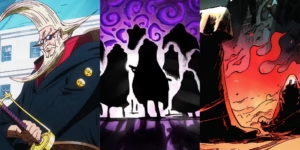
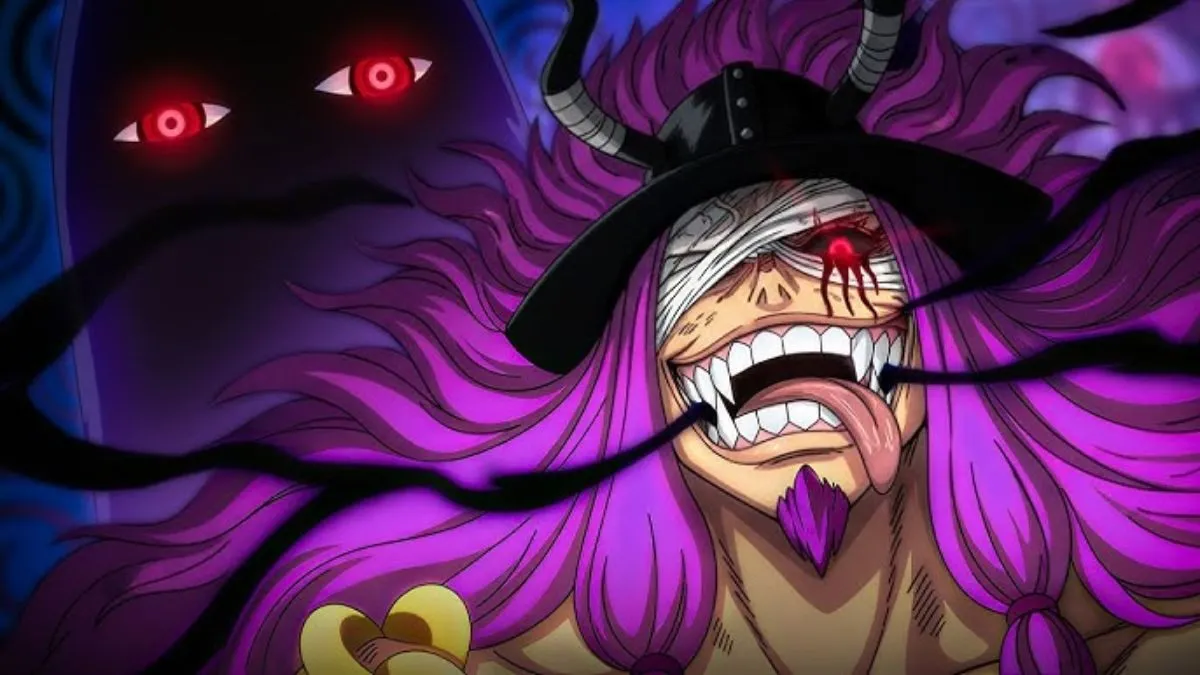

Loki is the prince of Elbaph, son of King Harald and Queen Estrid, half-brother of Hajrudin, and the most powerful giant currently alive in the One Piece world. He is chained beneath Elbaph’s sacred Treasure Tree Adam in seastone restraints, sentenced to imprisonment after allegedly murdering his father to acquire a legendary Devil Fruit passed down through Elbaph’s royal bloodline. His people call him the Accursed Prince and the Shame of Elbaph. He calls himself the Sun God.
First introduced in Chapter 1130, Loki has since become the most discussed character in the Final Saga. This article covers everything confirmed about him so far, with theories clearly labeled where facts end.
⚠️ Spoiler Warning: This article covers content from One Piece Chapter 1130 onward, including Elbaph arc revelations. If you are not caught up to the current manga, proceed with caution.
Who Is Loki in One Piece?
Loki is the second prince of Elbaph, the kingdom of giants that One Piece first referenced in 1999 during the Little Garden arc. He is 63 years old, born to King Harald and his second wife Queen Estrid. Because of his mother’s lineage, Loki was born with Ancient Giant features including horns, demonic slit-pupil eyes with black sclera, and physical strength that surpasses ordinary giants from birth.
His physical capabilities are extreme enough that when Loki attempted to escape Elbaph, the entire warrior force of the giant kingdom, including some with Ancient Giant blood, worked together to restrain him. Even after being stabbed through the chest by multiple giant swords wielded by the Knights of God, he immediately stood, lifted his massive warhammer, and was still capable of fighting. He required seastone chains to keep him contained, the same material used to suppress Devil Fruit users across the One Piece world.
His bounty is confirmed at 2.6 billion Berries, placing him among the most wanted criminals alive and reflecting the World Government’s assessment of his threat level independently of his imprisonment by Elbaph’s own people.
Why Is Loki Important in the One Piece Story?
Loki matters to the Final Saga for several interconnected reasons that only become clear once you understand his full background.
He holds a legendary Devil Fruit that has been passed down through Elbaph’s royal family for generations. That fruit’s power has not been fully revealed as of the current manga, but it is described as dangerous enough that the giants believe his release will bring about the end of the world. A character who can genuinely concern Elbaph’s warrior culture, the same culture that produced Dorry and Brogy, two fighters who battled each other for 100 years straight, is operating at a scale the series has not previously depicted for a single individual.
He was captured and imprisoned by Shanks specifically, which connects him directly to the One Piece storyline’s most anticipated revelation: Shanks’ full role in the Final Saga. Loki used this connection to bargain with Luffy in their first meeting, offering to tell Luffy everything he knew about Shanks’ current whereabouts and plans in exchange for his freedom.
He also has a direct historical connection to Rocks D. Xebec, the most dangerous pirate in history before Roger’s era, which places Loki within the same mythological weight class as the series’ most significant villains. Loki idolized Rocks and repeatedly tried to join his crew. This connection to the Rocks era is one of the most significant details about his character for understanding what his role in the Final War might be.
Loki’s Role in the Elbaph Arc
Loki as the Prince of Elbaph
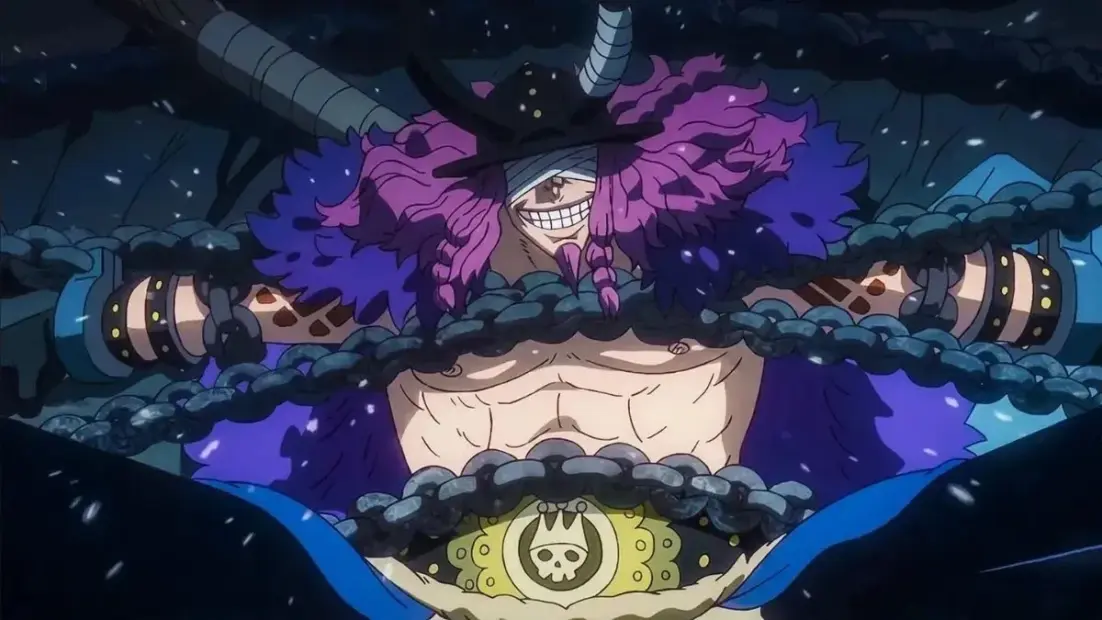
Before the events that led to his imprisonment, Loki was Elbaph’s recognized second prince. Giants from Elbaph carry a warrior culture that values strength, honor, and loyalty to the kingdom above all else. Loki’s status as the son of King Harald placed him within the most respected bloodline in giant society. His Ancient Giant heritage made him simultaneously revered and feared, as the features he was born with, the horns and slit pupils, led his own mother Queen Estrid to declare him a demon and throw him into the underworld as an infant. He climbed back out. That detail alone tells you what kind of character Oda designed.
Loki as the Accursed Prince
The title “Accursed Prince” comes from the chain of events that followed King Harald’s death fourteen years before the Elbaph arc. The giants’ understanding, and the version presented to readers in Chapter 1130, is that Loki murdered his father to seize the legendary Devil Fruit passed down through the royal family. He then attempted to flee Elbaph, was captured by Shanks six years before the Elbaph arc, returned to face judgment, sentenced to crucifixion, and eventually restrained with seastone chains wrapped around the Treasure Tree Adam in Elbaph’s underworld.
Later chapters in the Elbaph arc complicate this version significantly. Loki himself stated he did not kill his father out of cold blood. The fuller picture that emerges is that Harald was trapped in an Abyss contract with the World Government under Imu, which gave him immortality in exchange for Elbaph’s subservience to the World Government’s military ambitions. Harald wanted out of the contract and saw only one path: have Loki consume the legendary Devil Fruit, then use that power to kill him and break the contract’s hold on Elbaph. The “murder” was Harald’s own final wish to protect his kingdom.
Loki refused to clear his name after the fact, which earned him the Accursed Prince title permanently. He also carries the secondary title “Shame of Elbaph,” a term even the giants who respect him find overstated, as Gerd noted in Chapter 1130 that Road, not Loki, deserves that title more.
Loki’s Connection to the Giant Kingdom
Elbaph is the most powerful nation in the One Piece world by military force. The giants’ warrior culture has been established across the series as the benchmark for physical strength, with Dorry and Brogy’s duel used in the Little Garden arc to establish just how far above human scale giant combat operates. Loki is the most powerful giant in Elbaph, which makes him the most powerful giant alive in the One Piece world.
His relationship with the Giant Kingdom’s political structure, the tension between his royal birthright and his criminal status, is the central conflict driving the Elbaph arc’s internal drama alongside the threat of the World Government’s latest annexation attempt. The arc’s stakes involve both Luffy’s direct confrontation with Imu and the resolution of Loki’s imprisoned status, which is why his release and the truth of Harald’s death are the two most anticipated revelations still pending as of mid-2026.
Loki’s Family and Important Character Connections
Loki and King Harald
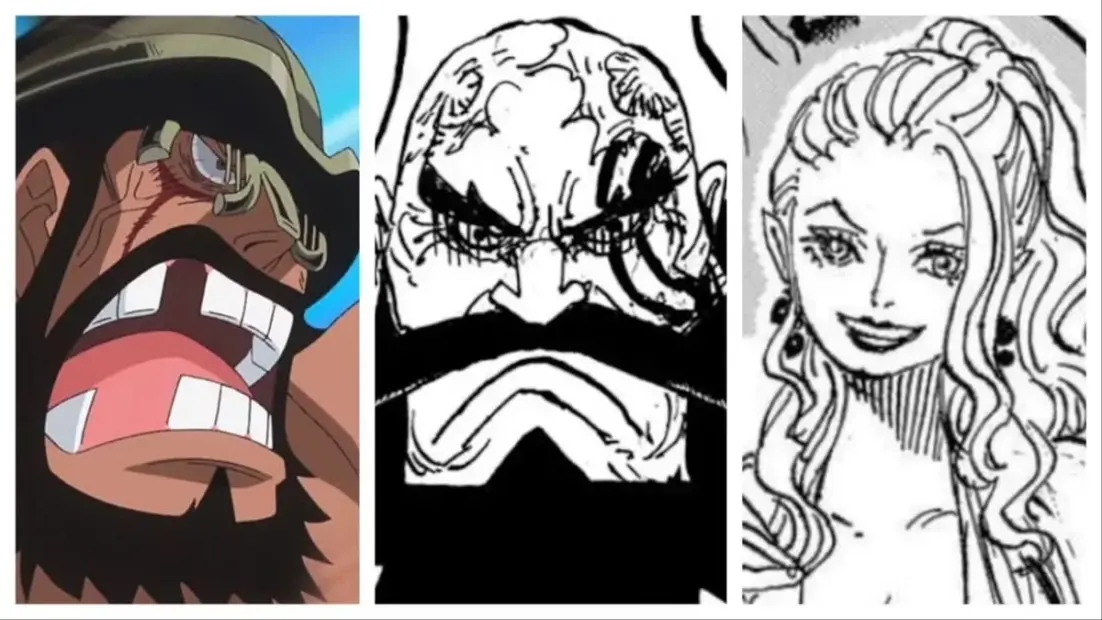
Harald was Elbaph’s king before his death fourteen years before the current arc. He is confirmed as having Ancient Giant heritage, making him one of the strongest giants of his era. His deal with the World Government, the Abyss contract described in later Elbaph chapters, was made to secure Elbaph’s formal recognition as a sovereign nation. The cost was his own servitude and ultimately his life, which he chose to end through Loki rather than continue serving Imu’s agenda.
The relationship between Harald and Loki is one of the most complex father-son dynamics in One Piece because it inverts the surface reading completely. What appeared to be patricide was actually the fulfillment of a father’s dying wish to protect his kingdom from foreign control.
Loki and Queen Estrid
Estrid is Loki’s mother and Harald’s second wife. Her rejection of Loki at birth, declaring him a demon and throwing him into the underworld because of his Ancient Giant features, is the earliest trauma in his backstory. That Loki climbed out of the underworld as an infant and returned to his family tells you something about his will before the story even gets to his adult actions. His relationship with Estrid is not developed in detail in the current arc, but her role in shaping his early identity as an outcast is confirmed.
Loki and Hajrudin
Hajrudin is Loki’s older half-brother, the first prince of Elbaph and the captain of the New Giant Warrior Pirates. He was also a member of Luffy’s Grand Fleet following the Dressrosa arc. Chapter 1130 reveals Hajrudin’s royal status explicitly for the first time in the manga, confirming he is another son of King Harald and therefore Loki’s half-brother through their shared father.
Their relationship within the arc has significant implications. Hajrudin wanted to come to Egghead himself to retrieve the Straw Hats, which speaks to his loyalty. His position as both Loki’s brother and a member of Luffy’s Grand Fleet places him at the intersection of the arc’s two major narrative threads: Elbaph’s internal politics and the Straw Hats’ final alliance against the World Government.
Loki and Charlotte Lola
This connection was first established in the Whole Cake Island arc, long before Loki’s actual introduction. Loki proposed to Lola, the 23rd daughter of Charlotte Linlin (Big Mom). He fell in love with her and a political marriage was arranged, which would have allied Elbaph’s giant military force with Big Mom’s crew, a combination that would have been catastrophically powerful for any opposing faction.
Lola fled rather than accept the arranged marriage, choosing to find love on her own terms. When Big Mom attempted to substitute Lola’s twin sister Chiffon in her place, Elbaph’s giants discovered the deception. The failed marriage alliance is one of the reasons Big Mom never received Elbaph’s support, and it is the reason she remained one of the Four Emperors without the giant army behind her. Lola’s refusal, and the consequences that followed, was one of the most consequential individual decisions in the series’ political history.
Loki and Shanks
Shanks is the person who captured Loki after his flight from Elbaph and returned him to face judgment six years before the arc. This is confirmed canon. Why Shanks intervened, what his relationship with Elbaph’s political situation is, and what he understood about Loki’s connection to the World Government’s Abyss contract are all questions the arc is actively building toward.
Loki holds a clear grudge against Shanks for his capture and return to imprisonment. He extended this grudge to Shamrock, whom he knew to be Shanks’ twin brother, and called Shanks a coward when speaking with Luffy. Whether this characterization reflects genuine opinion or was a deliberate provocation to gain Luffy’s attention is one of the arc’s open questions. The connection between Shanks and Loki is expected to be one of the most significant revelations in the remaining Elbaph chapters.
Loki and Monkey D. Luffy
Their first meeting in Chapter 1130 is one of the most interesting character introductions in the Final Saga. Luffy sensed Loki’s Haki before seeing him and felt genuine unease, which is rare. When they met, Loki initially attacked Luffy after being scolded, then shifted to bargaining, offering information about Shanks in exchange for freedom. Luffy foiled Loki’s attempt to use his human followers and tamed beasts as coercion by simply befriending the animals himself.
The dynamic between them mirrors Luffy’s earlier encounters with characters initially positioned as antagonists who become allies, but the scale of Loki’s power and the specificity of his worldview make the eventual relationship between them one of the most anticipated developments in the Elbaph arc. Loki is currently freed from his chains in the later arc chapters and fighting alongside Luffy against the World Government, consistent with the One Piece Wiki’s summary of his arc role as a “major ally of the Straw Hat Pirates in the Elbaph Arc.” Luffy’s own power in Gear 5, which you can read about fully in our Gear 5 explained guide, is described in Chapter 1130 analysis as potentially the only power that genuinely matches Loki’s threat level.
Why Was Loki Chained in One Piece?
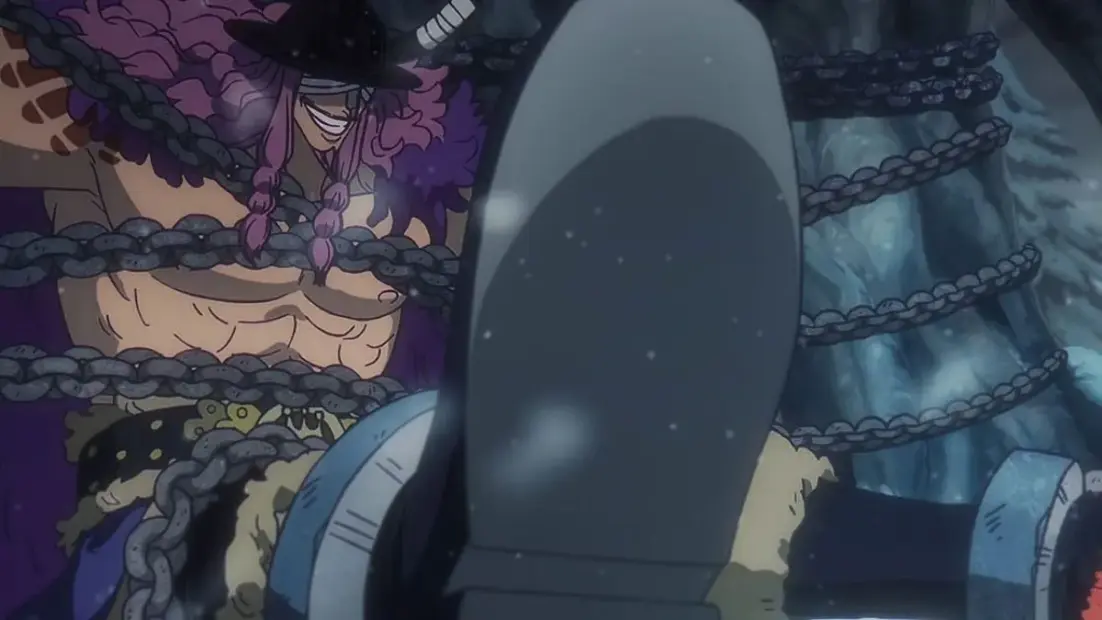
The surface answer from Chapter 1130 is: Loki was chained because he killed his father King Harald to obtain the legendary Devil Fruit of Elbaph’s royal family, attempted to flee, was defeated by the combined force of all of Elbaph’s warriors, and was sentenced to crucifixion before being restrained with seastone chains around the Treasure Tree Adam in Elbaph’s underworld.
The deeper answer is more complicated. Harald tasked Loki with killing him as a deliberate act to break the Abyss contract that had bound the king in servitude to Imu and the World Government. Loki was not committing murder for power. He was carrying out his father’s final wish to protect Elbaph from World Government control. He then refused to explain this to his people, accepting the criminal reputation rather than revealing the extent of the World Government’s infiltration into Elbaph’s leadership.
Whether Loki refused because he wanted the power, because he knew revealing the truth would not change the outcome, or because he had his own reasons for accepting the Accursed Prince identity is one of the character’s central unresolved questions. The seastone chains specifically indicate that Elbaph knew ordinary restraints could not hold him, which is itself a statement about his power level.
What Is Loki’s Devil Fruit in One Piece?
What Is Known About Loki’s Devil Fruit?
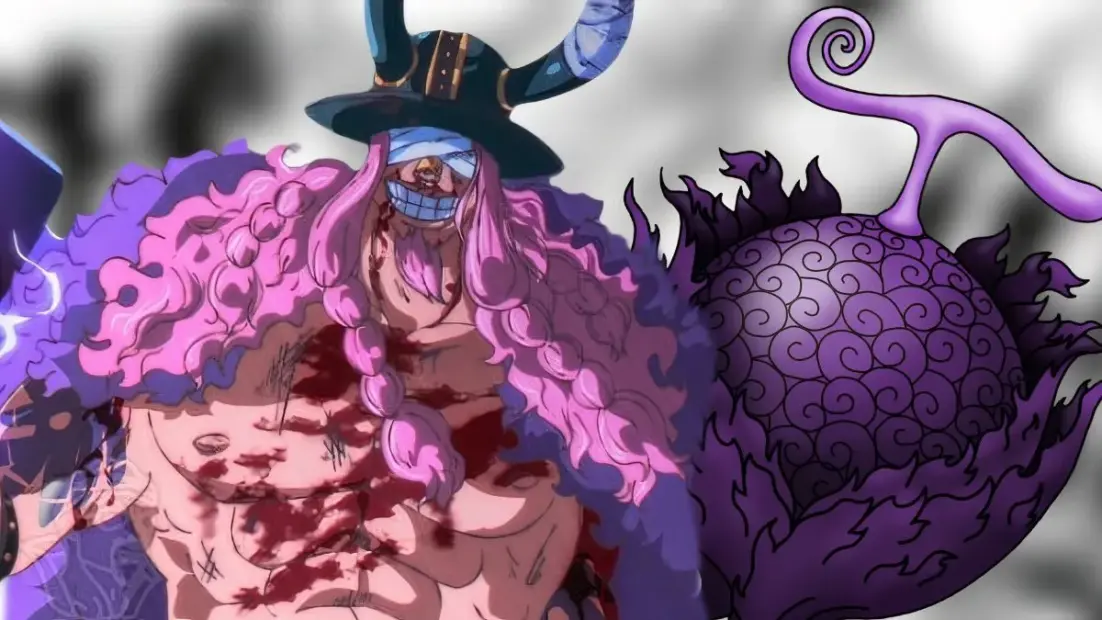
The confirmed facts from the manga: Loki’s Devil Fruit is described as legendary, has been passed down through Elbaph’s royal family for generations, and was consumed by Loki after he killed Harald. The fruit’s official name was revealed in Chapter 1175. His weapon, the warhammer named Ragnir, is connected to the fruit’s power.
Ragnir is inspired by Thor’s hammer Mjolnir in Norse mythology. The hammer reportedly has the spirit of Ratatoskr, the messenger squirrel of Yggdrasil from Norse mythology, suggesting either a Mythical Zoan Devil Fruit eaten by the hammer itself or a connection between the fruit’s power and the weapon. The hammer’s confirmed abilities include devastating thunderous attacks and ice powers, consistent with the Norse mythology framework Oda uses for Elbaph’s entire design.
Why Loki’s Devil Fruit Matters in the Final Saga
A legendary fruit passed down through royal bloodlines for generations within the most powerful warrior nation in the world carries automatic narrative significance. The fact that Imu and the World Government’s entire Abyss contract with Harald was designed to control Elbaph specifically because of this fruit suggests its power is something the World Government considers a threat to their control of the world order.
Combined with Loki’s Ancient Giant strength, which was already sufficient to require the combined force of all Elbaph’s warriors to restrain him before he consumed the fruit, the post-consumption power level is described as genuinely apocalyptic by Elbaph’s own people. The giants who have seen Loki’s strength firsthand believe his release means the end of the world. That is the same community that treats Dorry and Brogy’s century-long duel as a standard dispute resolution mechanism.
Is Loki a Villain, Ally, or Misunderstood Character?
All three, depending on which chapter you are reading.
Chapter 1130 presents him as a villain: chained, dangerous, claiming to be a Sun God who will end the world, attacking Luffy unprovoked. The initial framing is deliberately menacing. Oda designed his appearance, the bandaged eyes, the crowned Jolly Roger belt buckle, the long tongue and predatory grin, to evoke the fusion of Doflamingo’s cunning and Kaido’s overwhelming physical presence.
Later chapters reveal his backstory, which repositions him as a misunderstood character whose crimes were more complicated than they appeared. He killed his father to save his kingdom. He refused to clear his name. He was captured by Shanks, who he considers a coward for reasons that have not been fully explained. He idolized Rocks D. Xebec to an extreme degree, which tells you something about his values and his conception of freedom.
The One Piece Wiki’s confirmed summary describes him as “a major ally of the Straw Hat Pirates in the Elbaph Arc,” which means the villain-to-ally trajectory follows. This is consistent with Oda’s established pattern for One Piece antagonists: introduce them as threats, reveal the complexity behind the threat, and position them as allies against a larger enemy. Law, Kid, and Jinbe all followed variants of this pattern before Loki.
Loki’s Timeline in One Piece So Far
| Event | Timing |
|---|---|
| Loki born to Harald and Estrid, thrown into underworld by mother, climbs back out | 63 years before current arc |
| Loki meets Rocks D. Xebec on Elbaph as a child, attempts to join his crew repeatedly for 18 years | Approximately 60-40 years before current arc |
| Harald makes Abyss contract with World Government, becomes a Holy Knight of the Celestial Dragons | 14+ years before current arc |
| Harald orders Loki to kill him to break the contract, Loki consumes the legendary Devil Fruit and kills Harald | 14 years before current arc |
| Loki kills over 100 giant soldiers in the resulting battle, only Jarul survives besides Loki | Same event |
| Loki flees Elbaph, is captured by Shanks and returned | 6 years before current arc |
| Loki sentenced to crucifixion, restrained with seastone chains around Treasure Tree Adam | 6 years before current arc |
| Loki proposed to Lola (Whole Cake Island backstory, predates his imprisonment) | Mentioned in WCI arc |
| Loki formally introduced in Chapter 1130, meets Luffy on Elbaph | Current arc |
| Loki freed from chains, fights alongside Luffy against World Government | Current arc (2026 chapters) |
Loki’s Powers, Strength, and Threat Level
Loki’s Giant Strength
Before consuming any Devil Fruit, Loki’s physical capability was already extreme. In the battle fourteen years ago, he killed over 100 giant soldiers, including some with Ancient Giant blood, before allegedly killing Harald. Only Jarul, one of the eldest and most powerful giants in Elbaph’s history, survived the confrontation. Even in chains and imprisoned for six years in freezing conditions, he was stabbed through the chest by multiple giant swords wielded by the Knights of God and immediately stood back up.
The chain restraint using seastone, a material that negates Devil Fruit powers and significantly weakens those who touch it, was necessary not because of his fruit but because of his physical strength alone. This is an important detail: the seastone was primarily to suppress the fruit. Without it, his raw giant strength was already enough to require Elbaph’s entire warrior force to contain him.
Loki’s Devil Fruit Power
The legendary fruit gives him access to thunderous and ice-based abilities channeled through Ragnir. The hammer itself appears to have a spirit connected to Norse mythology’s world tree Yggdrasil, making it a weapon with its own significant narrative weight beyond being a standard melee tool. The hammer chose Loki as its wielder, which suggests either a sentient quality to the weapon or a compatibility condition that Loki’s specific abilities satisfy.
Loki’s Possible Role Against Bigger Threats
Elbaph’s people believe Loki’s release means the world ends. From the World Government’s perspective, a freed Loki allied with Luffy represents the combination of the most dangerous giant and the most dangerous pirate in history working together, which is precisely the scenario their Abyss contract was designed to prevent. Understanding Loki’s role in the Final War requires understanding our One Piece Final Saga roadmap, which covers the confirmed arc structure and the Great War setup that Elbaph is preparing.
Loki and Norse Mythology References in One Piece
Oda’s design of Elbaph and its characters is explicitly Norse-inspired throughout. Loki’s name comes directly from the Norse trickster god associated with mischief, chaos, and boundary-crossing. In Norse mythology, Loki is a shapeshifter who moves between worlds, causes catastrophes while also occasionally helping the gods, and is eventually chained beneath the earth as punishment for his crimes until Ragnarok releases him.
The parallels to One Piece’s Loki are precise: chained beneath the earth, considered a catastrophic threat, expected to be released at the moment of the world’s greatest conflict. Ragnir the hammer references Thor’s Mjolnir. The Yggdrasil world tree is the literal location of Loki’s imprisonment. Ratatoskr, the squirrel spirit in the hammer, is the messenger animal who runs up and down Yggdrasil in Norse mythology carrying messages between worlds. Oda has embedded the complete Norse mythological framework into Elbaph’s geography and character design.
One important difference from the Marvel version of Loki that many readers initially reference: One Piece’s Loki is not a shapeshifter, not an adopted prince, and not primarily motivated by sibling rivalry. The Norse mythology connection is structural, not based on the MCU interpretation. Readers who come to this character expecting Marvel’s Loki will find a significantly different character design philosophy.
Confirmed Facts About Loki vs Fan Theories
Canon Facts About Loki (Confirmed in Manga)
- Son of King Harald and Queen Estrid, half-brother of Hajrudin (Chapter 1130, One Piece Wiki confirmed)
- 63 years old, second prince of Elbaph
- Killed King Harald fourteen years before the Elbaph arc
- Consumed Elbaph’s legendary Devil Fruit passed down through the royal family
- Captured and imprisoned by Shanks six years before the arc
- Chained with seastone around Treasure Tree Adam in Elbaph’s underworld
- Bounty of 2.6 billion Berries confirmed
- Self-proclaimed Sun God title
- Idolized Rocks D. Xebec and repeatedly tried to join his crew
- Proposed to Charlotte Lola before his imprisonment
- Wields a warhammer named Ragnir connected to Norse mythology’s Ratatoskr
- Freed from chains during the Elbaph arc and becomes an ally of the Straw Hats (confirmed by One Piece Wiki arc summary)
- Harald’s death was the king’s own final wish to break the World Government Abyss contract (confirmed in later Elbaph chapters)
Popular Loki Theories to Treat Carefully
The specific nature of Loki’s Devil Fruit beyond the thunderous and ice abilities has not been officially named in a way that has reached wide confirmation. Fan theories proposing it is a specific Logia of light, a Paramecia of illusion, or the Mythical Zoan of Fenrir are exactly that: theories. Treat any confident claim about the fruit’s full classification as speculation until the manga makes it explicit.
The theory that Loki is a reincarnation of Joyboy or directly connected to the Joyboy mythology is popular but not supported by confirmed chapter content as of mid-2026. His self-proclaimed Sun God title parallels Luffy’s Nika identity, which fuels this theory, but parallelism is not confirmation.
Shanks’ specific motivations for capturing Loki and returning him to Elbaph are not confirmed in the manga. Fan theories about Shanks acting as a World Government agent, protecting Elbaph from Loki’s destabilizing influence, or having foreknowledge of the Final War’s structure are all plausible but unconfirmed.
Frequently Asked Questions About Loki in One Piece
Who is Loki in One Piece?
Loki is the second prince of Elbaph, the kingdom of giants. He is the son of King Harald and Queen Estrid, the half-brother of Hajrudin, and a major character in the Elbaph arc of One Piece’s Final Saga. He was imprisoned for killing his father and stealing a legendary Devil Fruit, but later chapters reveal Harald ordered Loki to kill him to break a World Government contract that controlled Elbaph.
Is Loki from Elbaph?
Yes. Loki is the prince of Elbaph, born and raised in the kingdom of giants. He was chained beneath Elbaph’s Treasure Tree Adam in the underworld of the kingdom after his crimes. His entire backstory is inseparable from Elbaph’s political history and the kingdom’s relationship with the World Government.
Yes. Hajrudin is Loki’s older half-brother. Both are sons of King Harald. Hajrudin is the first prince of Elbaph and the captain of the New Giant Warrior Pirates, revealed in Chapter 1130 to also hold royal status that was not previously made explicit in the manga.
Why is Loki called the Accursed Prince?
Because he was believed to have murdered his father King Harald to obtain the legendary Devil Fruit of Elbaph’s royal family. The giants sentenced him to crucifixion and restrained him with seastone chains when he attempted to escape. Later chapters reveal Harald ordered Loki to kill him to break a World Government Abyss contract, but Loki refused to clear his name, accepting the Accursed Prince reputation permanently.
Did Loki marry Lola?
No. Loki proposed to Charlotte Lola, the 23rd daughter of Big Mom, and a political marriage was arranged that would have allied Elbaph’s giant army with Big Mom’s crew. Lola fled rather than accept the arranged marriage. When Big Mom tried to substitute Lola’s twin sister Chiffon, Elbaph’s giants discovered the deception and the alliance collapsed entirely.
Is Loki a villain in One Piece?
Initially presented as a villain in Chapter 1130 based on the surface reading of his crimes and his menacing design. Later chapters reveal his backstory is more complicated: killing Harald was his father’s dying wish to save Elbaph. The One Piece Wiki confirms he becomes a major ally of the Straw Hat Pirates during the Elbaph arc, following the pattern Oda uses for characters introduced as antagonists who join Luffy’s cause against larger threats.
Final Summary: Why Loki Matters in One Piece
Loki is the most powerful giant alive, carrying a legendary Devil Fruit, a history with Rocks D. Xebec, a direct connection to Shanks, a proposed marriage to Big Mom’s daughter, and a father whose death bound Elbaph’s fate to the World Government’s control. He is chained not because he was simply evil but because he refused to explain an act that was fundamentally a sacrifice for his kingdom.
He is the character Oda spent over two decades setting up for the Elbaph arc. His release and his alliance with Luffy represent the convergence of One Piece’s most powerful warrior culture with Luffy’s own cosmic-level power as the Sun God Nika, the same power explained in full in our Gear 5 explained guide. Two characters who both claim the Sun God title fighting on the same side against the World Government is the kind of narrative payoff Oda has been building since the Little Garden arc first established giants as the benchmark for extraordinary strength.
For the complete picture of where Loki’s story fits in the Final Saga’s remaining arc structure, our One Piece Final Saga roadmap covers every confirmed arc and what comes after Elbaph. For fans who want to follow Luffy’s journey through merchandise and collectibles while the Elbaph arc continues, our best One Piece gifts guide and best Monkey D. Luffy gifts guide cover the top picks across the franchise.
What do you think Loki’s legendary Devil Fruit actually is? Drop your theory in the comments below!
Sources and References
- One Piece Manga Chapter 1130, “The Accursed Prince” — Loki’s formal introduction, confirmed as second prince of Elbaph, killed King Harald to acquire legendary Devil Fruit, chained by all of Elbaph’s warriors, self-proclaimed Sun God, first official romanization of “Elbaph” confirmed (VIZ Media official translation)
- One Piece Wiki — Loki character page: son of Harald and Estrid, half-brother of Hajrudin, foster son of Ida, bounty 2.6 billion Berries, Accursed Prince and Shame of Elbaph titles, idolized Rocks D. Xebec, captured by Shanks six years before arc, confirmed as major ally of Straw Hats in Elbaph arc (onepiece.fandom.com/wiki/Loki)
- One Piece Wiki — Chapter 1130 page: Hajrudin confirmed as prince, Loki’s design description, Gerd’s comment about Road vs Loki as Shame of Elbaph (onepiece.fandom.com/wiki/Chapter_1130)
- One Piece Wiki — Elbaph page: kingdom context, Treasure Tree Adam location, giant warrior culture (onepiece.fandom.com/wiki/Elbaph)
- VIZ Media — One Piece Chapter 1130 official English release (viz.com/shonenjump)
