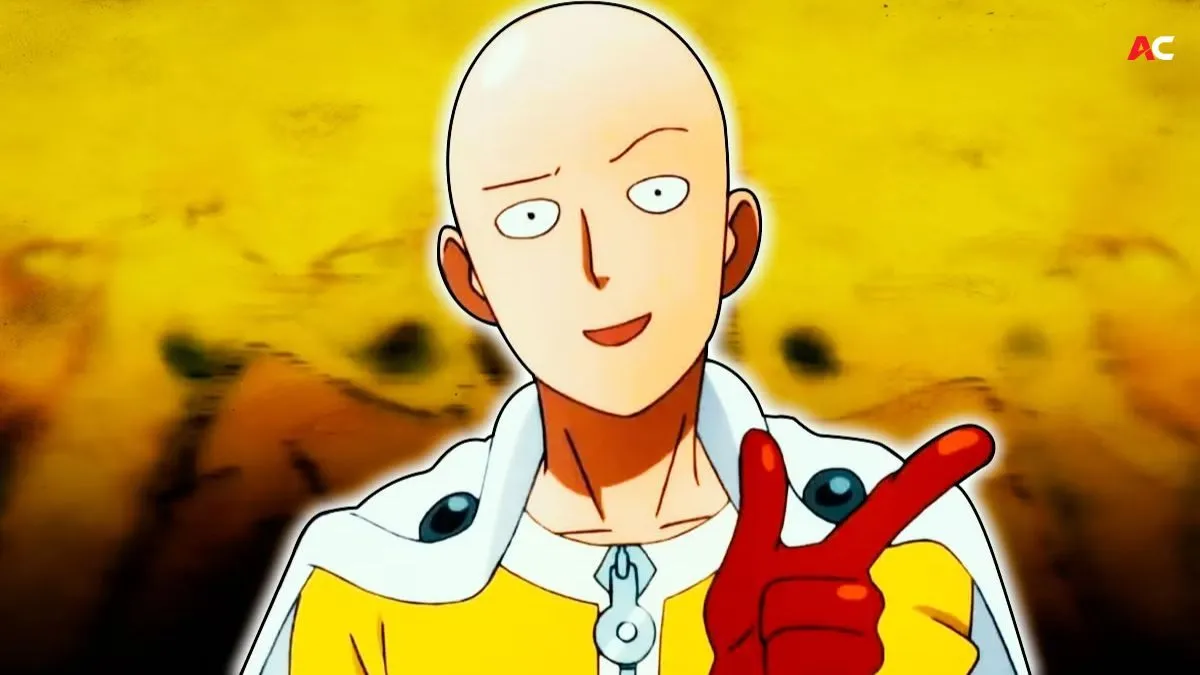

Every anime fan eventually asks the same question. If Saitama can defeat anyone with a single punch, what is actually stopping someone from defeating him? Not “who is strong enough” but why, at a fundamental level, does the concept of defeat not apply to him the way it does to every other character in fiction.
I have watched One Punch Man from Season 1 through the manga’s current arc, followed every fan theory, and read Dr. Genus’s limiter explanation multiple times. The answer is not as simple as “he trained hard.” The real reason Saitama cannot be defeated operates on three levels simultaneously: scientific, philosophical, and narrative. This article breaks down all three with the depth the question actually deserves.
The Surface Answer Everyone Gets Wrong
Most fans stop at the surface answer. Saitama trained for one and a half years doing 100 push-ups, 100 sit-ups, 100 squats, and a 10km run every single day without rest. The training made him strong. That is technically correct but completely misses the point.
Other heroes in One Punch Man train far more brutally. Genos had his body mechanically rebuilt with the most advanced technology available. Bang trained for decades in martial arts. Garou pushed the human body so far past its limits that he physically transformed. None of them came close to Saitama.
The training is not what made Saitama unbeatable. The training was the trigger for something else entirely. Something that Dr. Genus explains in chapter 89 of the manga, and something that most anime-only viewers never fully understand.
The Limiter: The Real Scientific Explanation
Dr. Genus, the scientist who created House of Evolution, explains the concept that actually answers everything. Every living being, human or monster, has what he calls a “Limiter.” This is a biological and metaphysical cap placed on how powerful any creature can become. According to Genus, this limiter is put in place by God, the overarching antagonist referenced throughout the manga, to prevent any being from obtaining unlimited power.
The reason this limiter exists is logical within the story’s rules. A being that surpasses its limiter becomes overwhelmingly powerful and simultaneously loses all sense of purpose and sanity. The power becomes meaningless because there is nothing left to challenge it. Monsters in One Punch Man are often humans who pushed past emotional limits and transformed, losing their humanity in the process. The limiter is a safety mechanism that keeps existence balanced.
Every single other hero and villain in One Punch Man operates within their limiter. They train, they grow, they reach the ceiling of their limiter, and they stop there. That ceiling is high for S-Class heroes. It is astronomical for characters like Tatsumaki and Blast. But the ceiling exists.
Saitama destroyed his.
How Saitama Actually Broke His Limiter
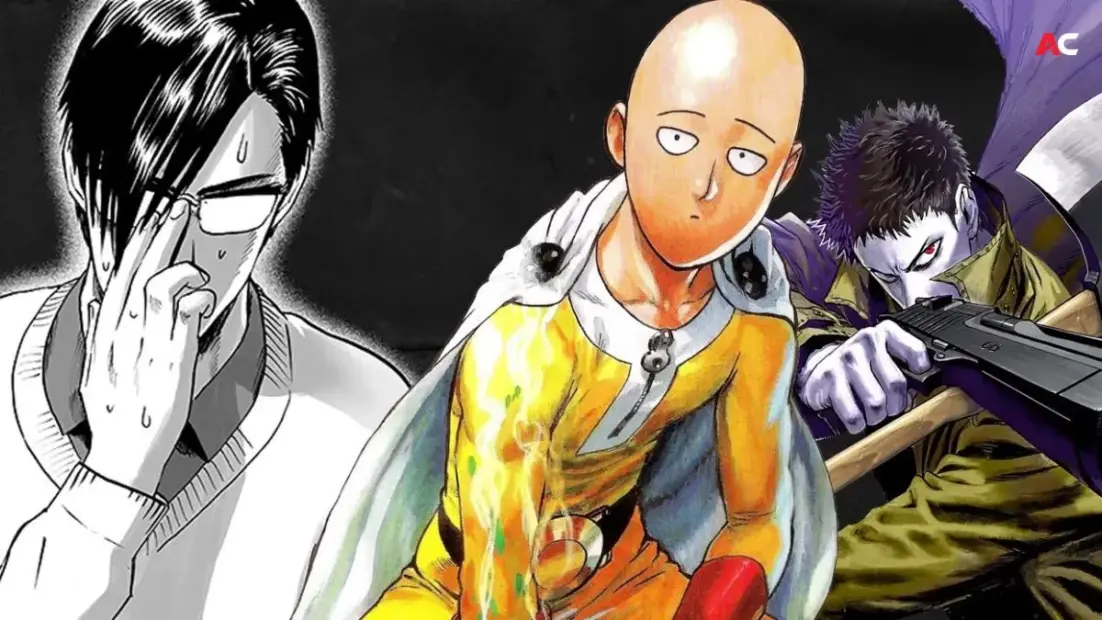
This is where the answer gets genuinely interesting. Saitama did not break his limiter through extraordinary talent, divine blessing, or some special technique. He broke it through something completely mundane: he simply refused to stop.
The One Punch Man webcomic creator ONE has described Saitama as someone who was so emotionally empty and purposeless that he had nothing to protect himself with. No self-preservation. No fear of injury. No biological signal telling him to slow down. He trained every single day with the same routine until his body had no choice but to adapt beyond what nature intended. The hair loss, which Saitama attributes to his training, is one physical manifestation of his body crossing lines it was never meant to cross.
Most people cannot break their limiter because their mind stops them first. Pain signals. Exhaustion. The instinct for self-preservation. Saitama, at the lowest point of his life when he began training, had suppressed all of those signals completely. He trained as if his body was not his concern. That psychological emptiness was the exact condition required for limiter destruction.
Dr. Genus’s conclusion is that Saitama’s achievement is theoretically possible for any human but practically impossible because it requires a specific mindset that most people are biologically incapable of sustaining. Genus himself, despite being a genius scientist who spent decades pushing biological limits, never approached what Saitama achieved accidentally.
What “No Limiter” Actually Means in Combat
Once you understand the limiter concept, Saitama’s combat invincibility makes complete scientific sense within the story’s rules. He does not have a fixed power level. Every other character in fiction, including the most powerful, operates within a measurable range. Even Goku in Dragon Ball has a ceiling at any given moment, even if that ceiling keeps rising through transformations.
Saitama has no ceiling. His strength is not a number. His strength is always exactly as much as the current situation requires, plus more. This was demonstrated most clearly during the Cosmic Garou fight in the manga, the first battle where Saitama could not win with a single punch. What happened? Saitama simply kept growing stronger throughout the fight until Garou, who had absorbed God’s power and was operating at a cosmic scale, was surpassed. Saitama did not reach a new transformation. He just became stronger because the situation required it.
This means that defeating Saitama is logically impossible within the rules of the One Punch Man universe. To defeat him, you would need to be stronger than him at the moment of the fight. But Saitama, without a limiter, is always exactly as strong as needed to defeat whoever he is facing. Any power increase you bring to the fight is matched and exceeded automatically. It is not that he is the strongest possible being. It is that he is always stronger than you, specifically, right now.
The Philosophical Layer: Why the Question Itself Is the Point?
Creator ONE designed Saitama’s invincibility as a deliberate philosophical statement about the shonen genre, not just a power scaling exercise. Every great shonen protagonist, Naruto, Goku, Deku, Ichigo, follows the same arc: they are not strong enough, they train and struggle, they become strong enough, they face a new challenge that exceeds their current strength, the cycle repeats.
The appeal of this structure is the journey. The audience identifies with the protagonist’s struggle because we all understand what it feels like to be inadequate and work toward something. The fights are compelling because the outcome is genuinely uncertain.
Saitama exists as a thought experiment: what happens when a character skips all of that? What happens when you reach the end of the shonen journey before the story starts? ONE’s answer is that you get a person who has technically achieved the dream and is profoundly, existentially miserable because of it. The real enemy Saitama cannot defeat is boredom. The absence of challenge. The emptiness of a victory that costs nothing.
This is why the question “why can’t Saitama be defeated” has a second answer beyond the limiter explanation. He cannot be defeated because if he could be defeated, One Punch Man would become every other shonen series. His invincibility is the premise. The story is not about whether he will win. It is about what winning costs a person when it becomes completely effortless.
In five years of watching and analyzing anime, I have not encountered another series that constructs its protagonist’s power as a tragedy as effectively as One Punch Man does. Saitama’s strength is the source of his suffering, not his protection from it. That inversion is what makes him one of the most genuinely original protagonist concepts in anime history. Characters like him appear throughout the best anime characters of all time discussions precisely because his design challenges everything the genre assumes about what makes a protagonist compelling.
The God Factor: What the Manga Reveals
The most recent manga chapters add a third layer that neither the anime nor most fan discussions fully address. The entity called “God” in One Punch Man is aware of Saitama. During the Garou fight, God refers to Saitama as “the fist that has turned against God,” suggesting that Saitama’s limiter destruction is not simply an accident but a direct affront to the cosmological order God maintains.
God’s purpose within the story appears to be maintaining the balance that limiters enforce. Every other character who has been offered God’s power, Garou, Psykos, and others, accepted it and became monsters or agents of destruction. Saitama is the first being to exist entirely outside God’s system. He did not receive power from God. He did not break the limiter through divine intervention. He broke it independently, through a training routine anyone could theoretically replicate.
This makes Saitama uniquely threatening to the cosmological order in a way that no army of monsters or S-Class heroes could be. He represents proof that the system God maintains, the limiter system, can be dismantled through pure human will. Whether the manga will explore this fully remains to be seen, but it recontextualizes Saitama’s invincibility as something the universe’s own architect considers a problem.
Can Anyone Ever Defeat Saitama? The Honest Answer
Within the manga’s established rules, there is one theoretical scenario where Saitama could be defeated, and it does not involve raw power. Since Saitama grew stronger throughout the Garou fight rather than starting at maximum strength, a fast enough opponent who could eliminate him before he had time to adapt could potentially end the fight. This is the scenario where Blast becomes narratively relevant: Blast’s portal abilities could theoretically remove Saitama from a fight through displacement rather than defeating him through force.
However, the manga consistently implies that even displacement is temporary. Saitama demonstrated in the Garou fight that he can punch through the fabric of time itself, which puts spatial manipulation in doubt as a long-term solution.
The more honest answer is that Saitama is narratively invincible rather than technically invincible. ONE has never written a scenario where Saitama loses because the story’s entire thematic structure depends on him being undefeatable. The moment he loses a real fight, One Punch Man becomes a different story entirely. His invincibility is structural, not just quantitative.
One Punch Man stands apart from the rest of the best action anime of all time because it is the only series where the protagonist’s power level makes the fights less exciting on purpose. Every other action anime uses power as a tool to generate tension. One Punch Man uses it to eliminate tension and then asks what remains of a hero when tension is gone.
Why This Matters Beyond Power Scaling Debates
Power scaling debates about Saitama miss the point almost every time because they apply external frameworks to a character specifically designed to break those frameworks. The question is never “could Goku beat Saitama.” The question is what Saitama’s existence reveals about the characters and stories we find compelling.
We love Naruto because we watch him fail and try again. We love Goku because each transformation feels earned by accumulated struggle. We love Deku because his growth from quirkless to hero mirrors something real about human development. Saitama bypasses all of that and then asks if the destination has any value without the journey. His answer appears to be: no. Absolute power without struggle produces not happiness but a specific kind of emptiness that money, recognition, and victory cannot fill.
That is an unusually mature philosophical statement for an action anime to make, and it explains why One Punch Man resonates with adult viewers in a way most shonen series do not. It is not just a parody of power scaling. It is a genuine argument about what we are actually looking for when we watch heroes grow stronger. For fans who want to explore more series that use their protagonist design to make philosophical arguments, the best shounen anime of all time guide covers the series that do this most effectively. And if you’ve watched One Punch Man and want to own a piece of the franchise, our best anime gifts for him guide includes OPM merchandise picks alongside other top series.
Saitama vs the Greatest Anime Characters: Where Does He Actually Stand?
The limiter concept places Saitama in a unique position relative to every other overpowered character in anime. Characters like Rimuru Tempest from That Time I Got Reincarnated as a Slime, Ainz Ooal Gown from Overlord, and Anos Voldigoad from Misfit of Demon King Academy are all described as having functionally unlimited power within their story’s rules. The difference is that their power is defined by what they can do. Rimuru absorbs abilities. Ainz has a maximum level cap. Anos has specific spell categories.
Saitama’s power is defined by what it responds to. It is reactive rather than static. He is not the strongest at a fixed level. He is always exactly strong enough to win, regardless of what “strong enough” means in that specific moment. This is a fundamentally different category of power and it is why direct comparisons with other OP characters consistently fail to capture what actually makes him unbeatable.
The isekai genre in particular has produced dozens of “unbeatable” protagonists, most of which appear in our best isekai anime of all time guide. None of them operate on Saitama’s actual principle because none of them were designed to make a philosophical argument rather than a power fantasy. Saitama is a critique of OP protagonists while simultaneously being one. That contradiction is the entire point.
Frequently Asked Questions About Why Saitama Cannot Be Defeated
Can anyone in anime defeat Saitama?
Within One Punch Man’s own rules, no. Saitama destroyed his limiter, which means his power has no ceiling and grows to meet any challenge automatically. Outside the series, crossover debates are entertainment rather than analysis. But within the story ONE created, there is no mechanism by which Saitama can be permanently defeated through force.
What is the limiter in One Punch Man?
The limiter is the biological and metaphysical cap that every living being has on how powerful they can become. Explained by Dr. Genus in chapter 89 of the manga, it is described as a barrier placed by “God” to prevent any being from obtaining unlimited power. Saitama destroyed his limiter through his training, which is why he continues to grow beyond any measurable ceiling.
Did Saitama’s training really make him that strong?
The training itself was not extraordinary. 100 push-ups, 100 sit-ups, 100 squats, and a 10km run daily is intense but not impossible. What made the difference was Saitama’s psychological state during training: he trained with zero self-preservation instinct, no fear of injury, and no biological signals stopping him. This unusual mental condition was the specific requirement for limiter destruction, not the physical routine itself.
Why does Saitama feel empty despite being the strongest?
Because his strength makes every fight trivially easy. The appeal of combat for Saitama was always the challenge: the tension, the possibility of losing, the genuine excitement of not knowing the outcome. Once his limiter was destroyed, he lost all of those feelings. He wins every fight before he can feel anything about it. His emptiness is the direct consequence of achieving the dream he worked toward.
Has Saitama ever struggled in a fight?
In the manga, yes. The Cosmic Garou fight was the first time Saitama could not end a battle with a single punch. Garou, empowered by God, matched Saitama’s initial attacks. However, Saitama simply grew stronger throughout the fight until Garou’s power was surpassed. This demonstrated that his limiter destruction means he adapts upward rather than operating at a fixed maximum.
Is One Punch Man a parody or a serious series?
Both simultaneously. ONE designed it as a parody of shonen power-scaling conventions, which is why the comedy works. But beneath the parody is a genuinely serious philosophical argument about what unlimited power costs a person. Season 1 leans into the comedy. The manga’s later arcs become increasingly serious and emotionally complex. The best approach is to accept that it operates in both registers at once.
Why did Saitama lose his hair from training?
The hair loss is one of the physical manifestations of breaking his limiter. The story presents it as a consequence of pushing his body beyond biological design. Saitama himself attributes it to the training. The manga hints that the hair loss, along with his faded emotional responses, represents the price of his transformation. He sacrificed aspects of his humanity in exchange for invincibility, a trade he frequently seems to regret.
What would happen if Saitama fought Goku?
This debate has no correct answer because they exist in different stories with different rules. But applying One Punch Man’s limiter logic: if Goku presented a genuine challenge, Saitama would grow to surpass it during the fight itself. Whether Dragon Ball’s rules would override this is a matter of which story’s physics you apply. The debate is fun but ultimately unanswerable because it requires choosing which fictional universe’s rules take precedence.
The Answer Nobody Is Supposed to Find Comforting
The real reason Saitama cannot be defeated is not that he trained hard, not that his limiter is broken, and not that he is narratively protected by his story’s structure. The real reason is that he stopped caring whether he could be. When Saitama began training, he committed completely and without reservation, which destroyed the biological caps that protect normal people from transcending human limits. His invincibility was not a goal. It was a side effect of absolute psychological commitment.
This is ONE’s actual argument hidden underneath the comedy and the power fantasy. The characters we consider unbeatable are not unbeatable because they were blessed or chosen or trained the hardest. They are unbeatable because at some specific moment, they committed to something so completely that the rules stopped applying to them. That moment cost Saitama his hair, his emotional range, and his ability to feel excitement. The story asks whether that trade was worth it. Saitama’s expression across hundreds of chapters suggests his answer is that he still is not sure.
One Punch Man sits at the top of the best action anime conversation not because of Saitama’s power but because of what that power reveals. It is the only action series I know that uses its protagonist’s strength to make you feel sad rather than inspired, and pulls that off while being consistently one of the funniest anime ever made. That combination is genuinely rare. If you haven’t watched it, start with Season 1 immediately. If you have, the manga’s current arcs resolve much of what the anime left unanswered and reward every theory you’ve developed. Fans who want to carry a piece of OPM with them daily can find our top picks in the anime gifts guide, and for a broader look at where One Punch Man fits among the all-time greats, our best anime of all time ranking covers it alongside the series that changed the medium permanently.
Do you think there will ever be a character in the One Punch Man universe who can genuinely challenge Saitama? Drop your theory in the comments below!

1 Comment
pu4k8z