Copyright © 2025 - animecrisp.com
All rights reserved

Meta Description: Looking for progression fantasy? Discover the top 10 anime where the MC levels up, featuring Solo Leveling Season 2, Overlord, and rising hits of 2025–2026.
There is a primal satisfaction in watching a character go from zero to hero. The “Zero to Hero” trope has evolved. It is no longer just about training montages in the rain. It is about blue status screens, skill trees, and quantifiable damage numbers. We love seeing the math behind the magic. The progression-based genre has taken over the medium, giving viewers a front-row seat to the mechanics of power.
As we move into 2025 and 2026, the landscape of leveling anime is shifting. Modern titles are ditching generic fantasy tropes for complex “System” mechanics. We are seeing AI-powered combat designs, intricate evolution trees, and narratives where political power scales alongside physical strength. Whether it is a hunter awakening in a modern city or a slime building a nation, the core appeal remains: measurable, undeniable growth.
What Defines Progression-Based Anime?
The “Level Up” category is distinct from standard shonen action. In traditional anime, characters get stronger through sheer willpower or friendship. In progression anime, strength is a mechanic. It borrows heavily from RPG video games. You will see hit points, mana bars, and unique skills that must be unlocked. This genre turns the abstract concept of “getting stronger” into data.
In the 2025–2026 release cycle, this genre is maturing. We are moving away from simple “isekai” setups. Now, we see “System-based” worlds where the laws of physics are replaced by game logic. Creators are integrating AI combat analysis and reincarnation frameworks that allow for infinite scaling. The following list represents the pinnacle of this trend—the shows where the Main Character (MC) doesn’t just fight; they evolve.
Top 10 Anime Where the MC Levels Up
1. Solo Leveling Season 2: Arise from the Shadow
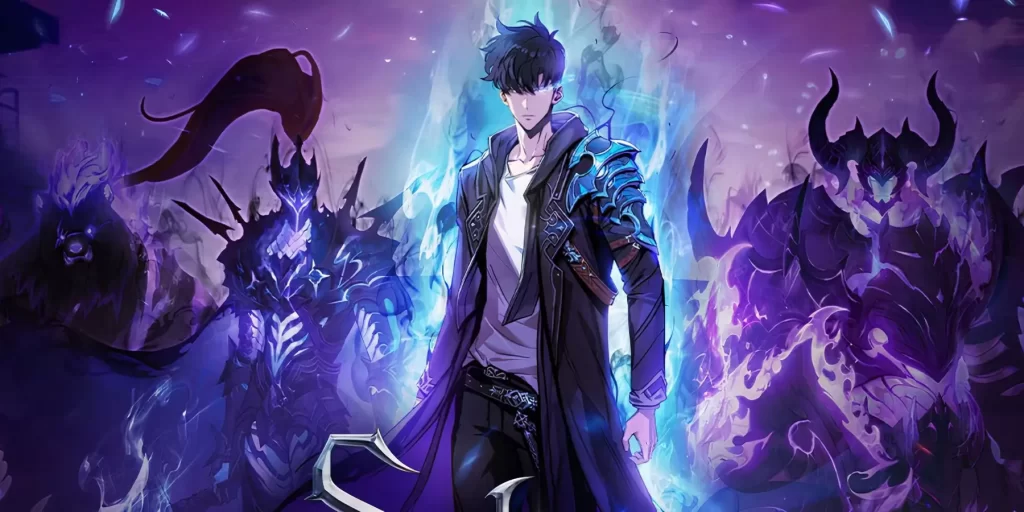
Focus: Sung Jinwoo’s global awakening arc.
Release Window: Early 2025.
The first season introduced us to the concept of the “Player,” but Season 2 is where the game truly breaks. Solo Leveling: Arise from the Shadow shifts the narrative scope from dungeon survival to global dominance. Sung Jinwoo is no longer just hunting monsters; he is building an army. The leveling mechanic here is unique because it scales exponentially. Every enemy defeated can be resurrected as a loyal shadow soldier. This creates a feedback loop of power: the stronger the enemy Jinwoo kills, the stronger his personal army becomes. In this season, we expect to see the “Shadow Monarch” class skills fully utilized.
Viewers should pay close attention to the “System” interface in this arc. It begins to reveal its true purpose. The leveling isn’t random; it is preparing Jinwoo for a war that predates humanity. The animation is set to capture the sheer scale of his summons, moving from handfuls of goblins to hundreds of elite shadow knights. The introduction of international S-Rank guilds adds a new layer of friction. Jinwoo isn’t just leveling his stats; he is leveling his political standing. He moves from a national asset to a global superpower, capable of clearing gates that entire countries fear. This is the definitive power fantasy for 2025.
2. Mashle: Magic and Muscles Season 2
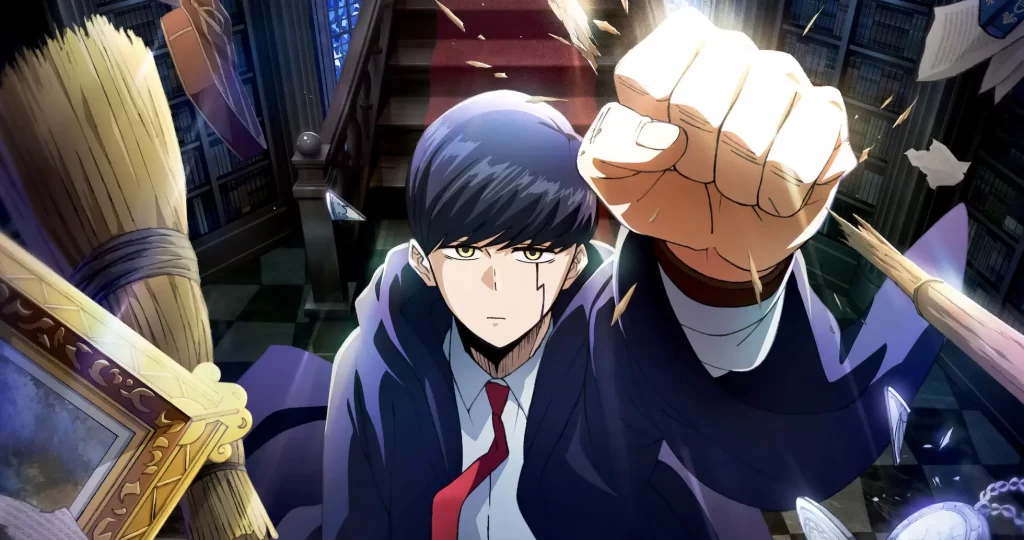
Focus: Mash Burnedead’s physical stat progression.
Release Window: 2025.
Mashle offers a hilarious but hype-inducing counterpoint to the traditional leveling narrative. In a world governed by intricate magic tiers and mana capacity, Mash Burnedead has zero magic. His “leveling” is purely physical. While other characters unlock complex spell trees, Mash optimizes his muscle mass. Season 2, covering the Divine Visionaries arc, forces this physical progression to its limit. The show treats his muscles like a high-level cheat code. It is a masterclass in “stat-checking” opponents who rely on complex mechanics.
The appeal here lies in the “Tier-Based” magic system versus raw stats. The enemies Mash faces in 2025 possess god-tier magic capable of warping reality. Mash counters this not with anti-magic, but with speed and force that defy physics. His “level up” moments come from finding creative ways to apply brute force to magical problems. For example, if a barrier is unbreakable by magic, he simply vibrates his muscles fast enough to phase through it or break the sound barrier to outpace a spell. It is a satire of RPG mechanics that works because the action is genuinely high-stakes. The progression is about proving that physical stats, when maxed out, can override the system entirely.
3. Re:Monster (Season 2)
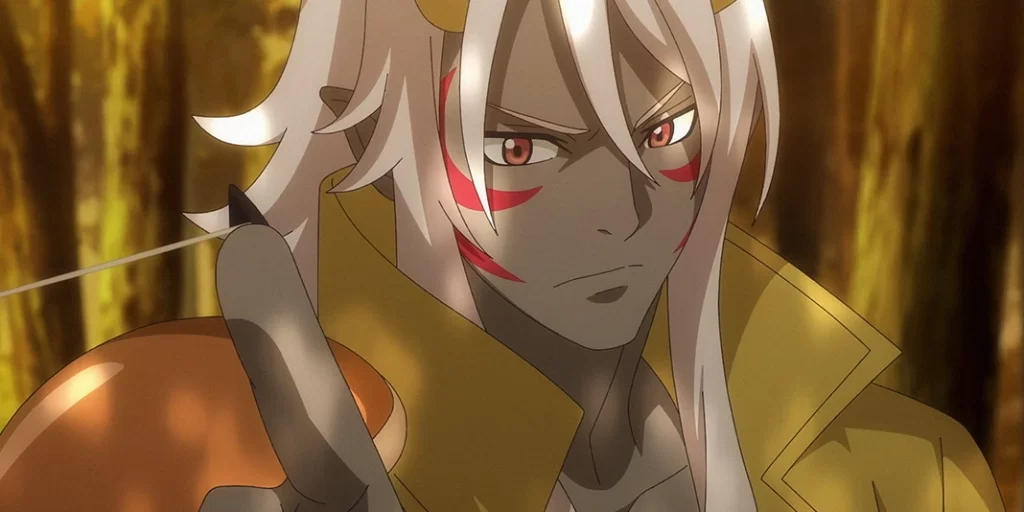
Focus: Goblin MC’s evolution tree upgrades.
Release Window: 2025.
Re:Monster takes the leveling concept and makes it biological. The protagonist, Rou, possesses the “Absorption” ability, allowing him to gain the skills and stats of anything he eats. This creates a rogue-like progression system where every meal is a potential level-up. Season 2 expands this dramatically. Rou is no longer just a goblin; he is evolving through rare variant species trees. The thrill comes from the unpredictability of his evolution path. Unlike a fixed class system, Rou’s growth is determined by his diet and combat encounters.
In the upcoming season, the focus shifts to territory expansion and mercenary work. Rou’s individual leveling triggers a “command aura” effect, buffing his subordinates. This introduces a “Squad Leveling” dynamic. As Rou evolves into higher monster tiers—moving toward Ogre and beyond—his physical appearance and magical affinities shift drastically. The show excels at displaying the “Skill Tree” menu, showing viewers exactly what passive buffs he has acquired. From gaining acid resistance to acquiring psychic communication, the sheer volume of skills Rou manages makes him a swiss-army knife of combat. It is a dark, gritty take on the genre where survival of the fittest is the only law.
4. That Time I Got Reincarnated as a Slime Season 3
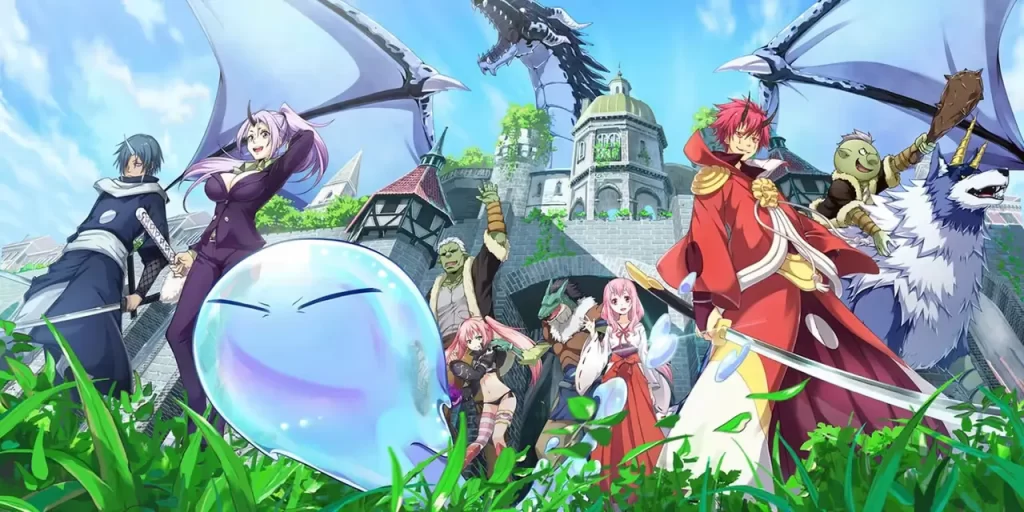
Focus: Rimuru Tempest’s saint-class evolution.
Release Window: 2025.
Rimuru Tempest defines the “Civilization Building” style of leveling. By Season 3, the scale has moved beyond personal strength to geopolitical dominance. However, Rimuru’s personal stats remain central. After his evolution into a True Demon Lord (Harvest Festival), his power cap has effectively vanished. The focus in 2025 is on “Skill Fusion.” Rimuru’s partner AI, Raphael (now evolving into Ciel), constantly optimizes his skill set. It merges redundant low-level skills into “Ultimate Skills,” maximizing efficiency. This is the backend coding of anime power systems brought to life.
The narrative arc for 2025 involves the confrontation with the Western Holy Church and the other Demon Lords. We see the “Soul Corridor” mechanic in action. This allows Rimuru’s subordinates to level up simply by being connected to him. It is a trickle-down power system. When Rimuru gets stronger, his entire nation gets a stat boost. This season also explores the complexities of “Saint-Class” magic and barrier techniques. The joy of watching Slime is seeing how Rimuru analyzes an opponent’s complex attack, creates a hard counter via his internal system, and consumes the ability to add it to his own arsenal. It is the ultimate power accumulation loop.
5. Tower of God Season 3
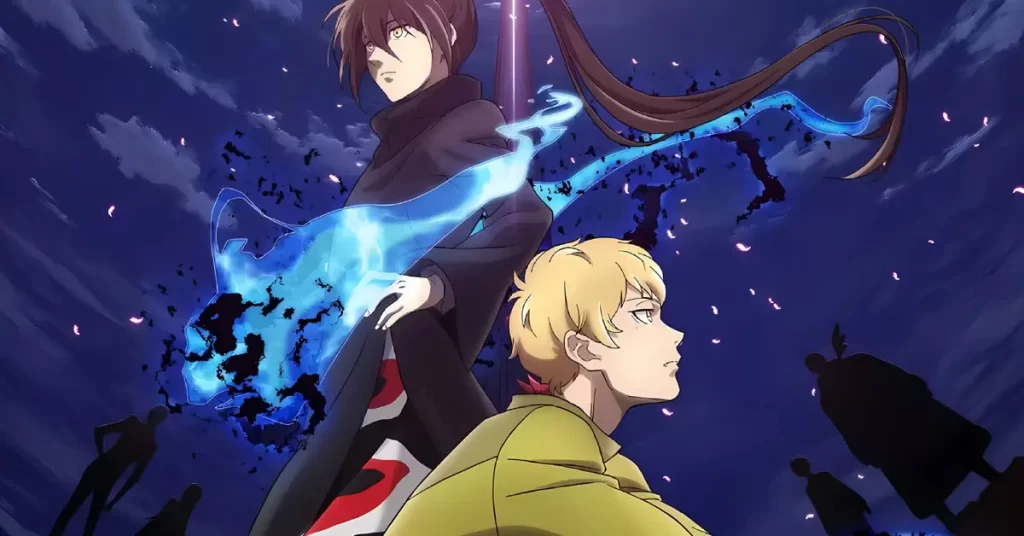
Focus: Bam’s irregular scaling.
Release Window: 2025–2026.
Tower of God uses a vertical progression system. The “Tower” is essentially a massive game server where each floor represents a higher difficulty level. To ascend, you must pass tests administered by the Administrators. Bam, the protagonist, is an “Irregular”—someone who entered the tower from the outside. This means the system’s level caps do not apply to him. Season 3 focuses on his mastery of Shinsu (the world’s energy source). Unlike others who must sign contracts to use Shinsu, Bam’s control is limitless. His growth is about capacity and technique.
The 2025–2026 arc sees Bam diving into the politics of the Great Families. His leveling is marked by the acquisition of “Ignition Weapons” and the “Thorn.” These are external items that fuse with his body to multiply his stats. We also see the development of his “Orb” technique, a unique Shinsu quality that defines his combat style. The show emphasizes “Floor-Based Growth.” The pressure (Shinheuh) on higher floors is crushing; simply standing there requires high stats. Bam’s journey is a grind against a rigged system. Every fight is a lesson in breaking the rules of the Tower, transforming him from a boy into a god-slayer capable of threatening the immortality of the floor rulers.
6. Sword Art Online: Unital Ring Arc (New Project)

Focus: Kirito’s adaptive leveling in a unified survival world.
Release Window: Expected 2026.
Sword Art Online is the grandfather of the genre, but the Unital Ring arc reinvents the wheel. Following the events of Alicization, the worlds of SAO, ALO, and GGO forcibly merge into a single survival game called Unital Ring. This is not a standard VRMMO; it is a brutal survival sim. Kirito starts with his levels reset or converted. He retains his sword skills, but his gear and high-tier stats are stripped or altered. This forces a “Rebuild” style of progression. He must craft gear, manage hunger and thirst, and adapt to a world without safe zones.
The key to this 2026 project is the “Cross-Game Skill Merge.” Skills from gun-based games and magic-based games are now interacting in unpredictable ways. Kirito’s leveling involves deciphering these new meta-rules. He has to combine swordplay with survivalist crafting. The interface is glitchy and mysterious, adding a layer of mystery to the progression. It is less about being the “Black Swordsman” with overpowered stats and more about being the smartest veteran player in the room. The tension comes from the permadeath risk and the fact that all players, friends and foes alike, are thrown into this unified map. It is raw, tactical leveling at its finest.
7. Mushoku Tensei: Season 3

Focus: Rudeus Greyrat’s advanced magic mastery.
Release Window: 2025.
Mushoku Tensei takes a scholarly approach to leveling. There are no game screens, but the progression is undeniable. Rudeus Greyrat’s power comes from his mana capacity, which he expanded through relentless training as a toddler. Season 3 focuses on his adulthood and the mastery of “Saint” and “King” tier magic. The leveling here is academic. Rudeus researches ancient spells, modifies incantations, and experiments with voiceless magic. It treats magic like a science that requires study, not just an unlock button.
The 2025 season dives into “Bloodline Breakthroughs” and the deeper lore of the Six-Sided World. Rudeus is physically weak compared to the sword masters he meets, so he levels his utility. He develops “Magic Armor” concepts to compensate for his lack of “Touki” (battle aura). This gear-based leveling is crucial. He effectively builds a mech suit powered by his immense mana pool. The narrative also explores the scaling of his allies. As Rudeus grows, he uplifts those around him, researching better methods to protect his growing family. It is a grounded, emotional take on the power fantasy, where every level gained is a step toward protecting what matters, rather than just seeking glory.
8. Frieren: Beyond Journey’s End Season 2
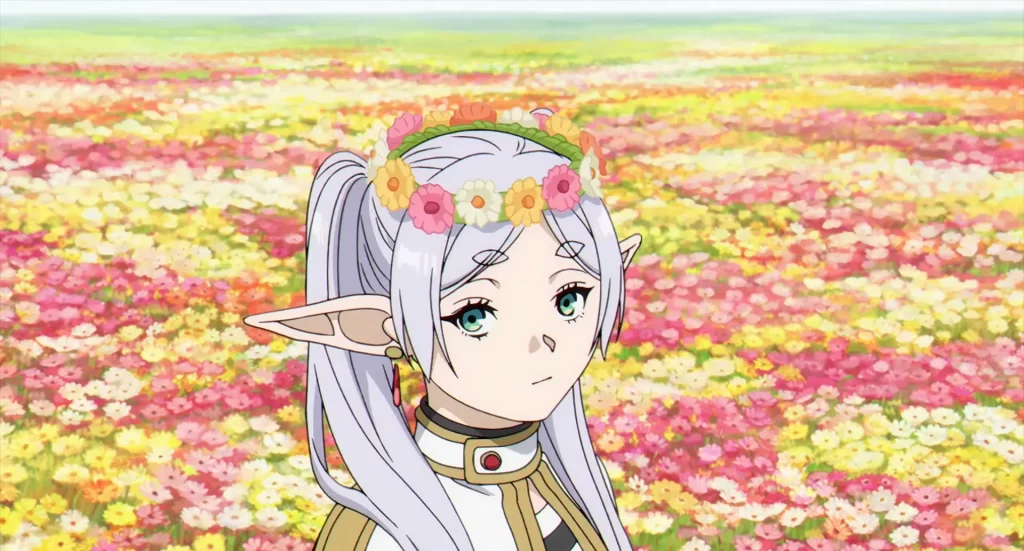
Focus: Frieren’s spell proficiency expansion.
Release Window: 2025.
Frieren offers a slow-burn leveling experience. As an elf who has lived for over a thousand years, Frieren is already at max level. However, Season 2 continues to show that “leveling” is about refinement, not just raw numbers. Her progression is horizontal. She collects “useless” folk magic alongside world-shattering combat spells. The focus of the upcoming season, likely covering further travels and the Golden Land arc, emphasizes “Mana Compression.” This technique deceives opponents about her true power level, leading to fatal miscalculations by demons.
The “Combat Exam” arcs introduced in the previous season set the stage for how magic is quantified. We see the hierarchy of mages (First Class, etc.). Frieren’s growth in 2025 is about mentorship. By teaching her apprentice Fern, Frieren refines her own understanding of human magic speed. The show deconstructs the idea of power creep. It shows that ancient magic isn’t always better; modern magic is faster and more efficient. Frieren’s “leveling” is her adaptation to this new era. She learns to counter the demons’ biological magic with human ingenuity. It is a beautiful, melancholic look at what it means to be strong in a world that keeps changing around you.
9. Overlord: Complete Arc Project (Final Chapter)
Focus: Ainz Ooal Gown’s world-tier power reinforcement.
Release Window: 2025–2026 (Project).
Overlord is the story of a max-level player in a low-level world. Ainz Ooal Gown cannot level up in the traditional sense because he is already at the level 100 cap. However, the Final Arc project focuses on “World-Tier” reinforcement. Ainz levels his kingdom, the Sorcerer Kingdom. He reinforces his power by acquiring “World Items”—game-breaking artifacts that can rewrite reality. The progression is strategic. It is about resource management, information control, and the expansion of influence.
The 2025–2026 conclusion will likely showcase the full extent of the Great Tomb of Nazarick’s power. We will see the “Racial Class Upgrades” of the NPCs. Ainz experiments with the limits of the New World’s magic system to see if he can break the level 100 cap for his subordinates. The tension comes from the fear of the unknown—are there other players? Ainz prepares for this by hoarding power. He uses “Super-Tier Magic,” spells that function like tactical nukes with long cooldowns. Watching Ainz play 4D chess against primitive kingdoms is the ultimate power trip. The leveling here is about total hegemony and the optimization of a perfect organization.
10. The Rising of the Shield Hero Season 4
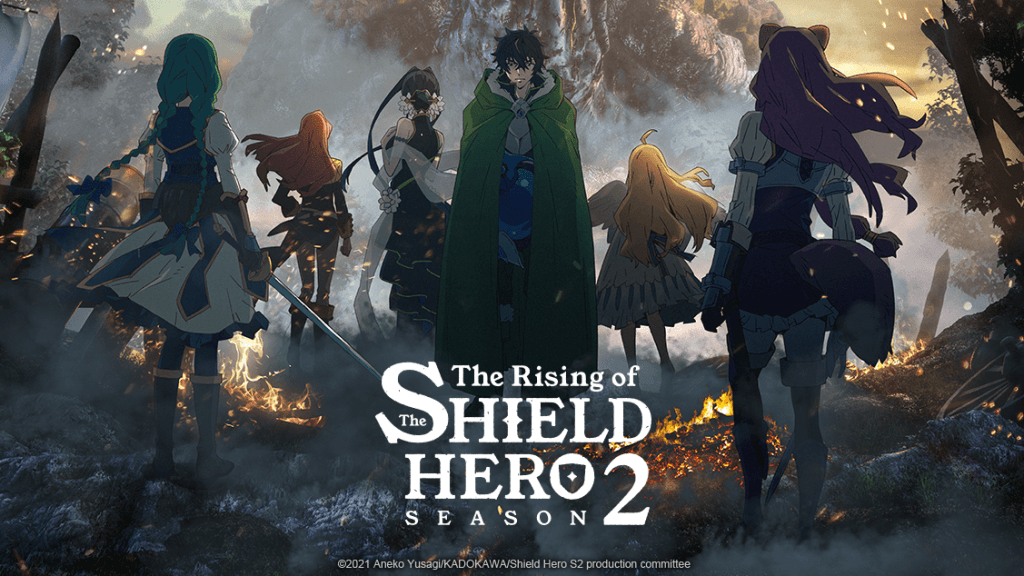
Focus: Naofumi’s defense-core scaling.
Release Window: 2025.
Naofumi Iwatani returns with his signature defensive progression. Unlike sword or bow heroes who scale damage, Naofumi scales survivability. Season 4 pushes the “Shield Form Evolution” to new heights. The Shield is a tech tree. Naofumi unlocks new shields by feeding monster parts into his weapon. Each shield offers passive buffs, resistance stats, or unique counter-skills. The 2025 season focuses heavily on “Curse Energy Management.” The Wrath Shield is a double-edged sword that damages Naofumi’s stats if overused. Mastering this risk-reward mechanic is his primary leveling hurdle.
The narrative expands to “Multi-World Raids.” Naofumi must level up not just to save his world, but to survive incursions from others. This introduces “Vanguard” mechanics where he must protect a raid party against new hero types from other dimensions. We also see the expansion of his territory’s stats. Rebuilding the demi-human village gives him access to unique support magic. The show satisfies the urge to see a tank class dominate the DPS chart. It is about turning the ultimate defense into a weapon, using counters, poison, and imprisonment skills to grind down opponents who rely solely on attack power.
Why Level-Up Anime Dominate 2025–2026
The trend is clear: audiences are obsessed with growth. The dominance of this genre in the 2025–2026 slate is not an accident. It is driven by a massive industry shift toward RPG-style progression narratives. Viewers in the digital age are used to feedback loops. We like seeing progress bars fill up. Anime has adapted this by making character growth measurable.
Multiple Japanese media studies suggest that viewer retention is significantly higher when power scaling is clear. Ambiguous strength leads to confusion; explicit ranking systems (like S-Rank to E-Rank) create instant stakes. Furthermore, the source material—Webnovels and Light Novels—is booming. These stories are written with game mechanics baked into the text, making them easy to adapt into visually engaging anime. Whether it is the visual dopamine of a “Level Up” notification or the complexity of a skill tree, these shows speak the language of the modern gamer.
Conclusion
The 2025–2026 anime season promises to be a golden age for progression fantasy. From the shadow armies of Solo Leveling to the strategic dominance of Overlord, there is a flavor of growth for every fan. These protagonists drive the narrative momentum because their goals are tangible. We aren’t just watching them dream; we are watching them build.
As we look toward late 2026, we can expect this genre to evolve even further, blending with sci-fi and survival horror. But for now, these Top 10 titles represent the peak of the current meta. Get your watchlists ready—it is time to level up.